
Loading

Best Orthopedic Doctor: How to Choose the Right Doctor for Bone and Joint Treatment
Best Orthopedic Doctor
When a person experiences persistent pain in the bones or joints, or suffers a sports injury or fracture, choosing the right doctor becomes one of the most important decisions they can make. Bone and joint problems do not only cause pain; they can also directly affect mobility, daily activities, and the ability to participate in sports and work normally. Therefore, many patients look for the best orthopedic doctor who has medical expertise, surgical skills, and the ability to determine the most appropriate treatment for each individual case.
Finding the right doctor requires considering a range of criteria, such as specialized expertise, experience in treating different conditions, the use of modern medical technologies, and the ability to provide both non-surgical and surgical treatment options when necessary, in addition to providing appropriate rehabilitation and follow-up after treatment.
Dr. Suleiman Mohammed Al-Shammari provides a comprehensive approach in the field of orthopedic and joint surgery, with a particular focus on treating joint osteoarthritis, sports injuries, arthroscopic surgeries, complex fractures, joint replacement, and deformity correction, helping patients restore mobility and improve their quality of life.
What Makes a Doctor the Best Orthopedic Doctor?
There is no single quality that makes an orthopedic doctor the best choice for every patient, as each condition has its own characteristics and requirements. A patient suffering from knee osteoarthritis may need a completely different treatment plan from someone who has experienced an anterior cruciate ligament tear, while another patient may require surgical intervention to treat a complex fracture or undergo joint replacement.
Therefore, when searching for the best orthopedic doctor, it is important to focus on a number of key factors, including:
Experience and Specialized Expertise
Experience is one of the most important criteria to consider. Orthopedics is a broad medical field that includes many specialized areas, such as joint surgery, sports injuries, arthroscopic surgery, fracture treatment, joint replacement surgery, and deformity correction.
An experienced orthopedic doctor can manage both simple and complex cases and determine whether the patient requires conservative treatment, therapeutic injections, physical therapy, or surgical intervention.
Accurate Diagnosis
Successful treatment begins with an accurate diagnosis. Knee pain, for example, may be caused by joint osteoarthritis, cartilage damage, ligament problems, inflammation, or other underlying conditions.
For this reason, a specialized doctor relies on the patient’s medical history, clinical examination, and assessment of symptoms, in addition to appropriate medical tests and imaging when necessary, to reach an accurate diagnosis and develop an appropriate treatment plan.
Choosing the Right Treatment for Each Condition
Not every type of pain requires surgery. One of the most important qualities of a good orthopedic doctor is the ability to determine the appropriate treatment based on the patient’s individual condition rather than relying on a single fixed procedure.
The treatment plan may include physical therapy, lifestyle modifications, medications, therapeutic injections, or other non-surgical options before considering surgery when these approaches are appropriate.
However, if surgery is determined to be the most suitable solution, the appropriate surgical procedure is selected based on the type of injury, its severity and progression, and the patient’s overall health condition.
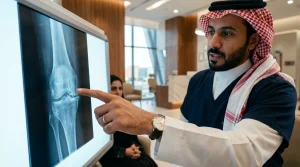
Dr. Suleiman Al-Shammari’s Orthopedic Surgery Services
Dr. Suleiman Al-Shammari’s specialty encompasses a wide range of services related to bones and joints, with a particular focus on conditions that affect the patient’s mobility and ability to perform daily activities.
Some of the key areas of treatment include:
- Treatment of joint osteoarthritis and joint pain.
- Knee and joint surgeries.
- Treatment of sports injuries.
- Knee and joint arthroscopic surgeries.
- Anterior and posterior cruciate ligament (ACL and PCL) reconstruction.
- Treatment and repair of cartilage injuries.
- Treatment of complex fractures.
- Surgical treatment of upper and lower limb fractures.
- Treatment of pelvic injuries.
- Joint replacement surgery.
- Treatment of joint dislocations in adults.
- Correction of knee deformities.
- Treatment of ankle and foot pain and injuries.
- Rehabilitation and post-operative follow-up programs.
This comprehensive range of services helps provide integrated care for patients suffering from various musculoskeletal conditions, with the goal of relieving pain, improving mobility, restoring joint function, and supporting a safe return to daily activities.
Best Orthopedic Doctor for Treating Joint Osteoarthritis
Joint osteoarthritis is one of the most common musculoskeletal conditions, particularly with advancing age. However, it can also develop in some individuals as a result of previous injuries, increased stress on the joint, or other contributing factors.
Osteoarthritis can cause symptoms such as pain, stiffness, difficulty moving, difficulty climbing stairs or walking long distances, and other limitations in daily activities. These symptoms may gradually worsen if the condition is not properly managed.
When searching for the best orthopedic doctor for the treatment of joint osteoarthritis, it is important to choose a doctor who does not rely solely on imaging results, but also evaluates the patient’s symptoms, their impact on daily life, and the functional condition of the affected joint.
Treatment may initially begin with conservative options, such as:
- Physical therapy.
- Strengthening the muscles surrounding the joint.
- Improving mobility and flexibility.
- Modifying activities that aggravate the pain.
- Weight management when necessary.
- Appropriate medications based on the doctor’s evaluation.
- Certain types of therapeutic injections when appropriate.
In advanced cases that do not respond adequately to conservative treatments, joint replacement surgery may become an appropriate option following a comprehensive assessment of the patient’s condition.
Treatment of Sports Injuries
Sports injuries are not limited to professional athletes. People may sustain sports-related injuries while playing football, running, exercising, or even during everyday activities.
Some injuries require specialized evaluation, including ligament, cartilage, and tendon injuries, as well as certain fractures and dislocations.
Sports injuries require an accurate treatment plan aimed at relieving pain, restoring mobility, improving joint stability, and enabling a gradual and safe return to physical activity.
The field of orthopedic sports surgery includes a range of procedures, including arthroscopic surgery, ligament reconstruction, and treatment of cartilage injuries.
ACL Surgery and Arthroscopic Procedures
Anterior cruciate ligament (ACL) injuries are among the well-known injuries in sports medicine. They may occur as a result of a sudden change in direction, twisting, falling, or physical contact during sports activities.
The decision to perform ACL reconstruction depends on several factors, including the nature of the injury, the degree of knee instability, the patient’s age, activity level, and the activities they wish to return to.
Arthroscopic procedures are characterized by the use of small incisions to access the inside of the joint. They can be used for a variety of diagnostic and therapeutic procedures depending on the patient’s condition.
It is important for surgery to be part of a comprehensive treatment plan, as rehabilitation and physical therapy play an essential role in restoring muscle strength, mobility, and joint function.
Treatment of Complex Fractures
Fractures vary significantly from one case to another. Some fractures are relatively simple and can be treated using conservative methods, while complex fractures may require surgical intervention to restore the bones to their proper position and stabilize them in a way that promotes healing and restores the function of the affected limb.
Complex fractures require expertise in assessing the shape and location of the fracture and determining the extent to which it affects the joints and surrounding tissues.
Cases requiring advanced expertise may include upper and lower limb fractures, fractures near joints, multiple or complex fractures, and certain pelvic injuries.
The goal of treatment is to promote proper bone healing, preserve limb function, and reduce the risk of complications associated with the injury.
Joint Replacement Surgery
When joint osteoarthritis reaches an advanced stage and the resulting pain significantly affects the patient’s daily life, the doctor may discuss the possibility of joint replacement surgery with the patient.
Joint replacement procedures are performed to remove or replace the damaged parts of the joint, with the goal of reducing pain and restoring a greater degree of mobility and function.
Among the major joints that may be replaced when clinically appropriate are the knee and shoulder, as well as other joints, depending on the diagnosis and the patient’s individual condition.
The success of joint replacement surgery does not depend on the surgical procedure alone. It begins with an accurate pre-operative assessment and selection of the appropriate procedure, followed by adherence to a structured rehabilitation and follow-up plan after surgery.
Knee Deformity Correction
Some individuals may experience deformities in the alignment of the knee, which can affect the distribution of load within the joint. In some cases, these deformities may be associated with joint pain or contribute to the progression of osteoarthritis.
Correcting these deformities requires a detailed assessment of the bone alignment, the joint, and the nature of the underlying problem, followed by determining the most appropriate treatment approach.
For this reason, consulting the best orthopedic doctor does not simply mean looking for a doctor who performs surgery. It means choosing a specialist who can assess the underlying problem comprehensively and determine the available treatment options based on the patient’s individual needs.
Treatment of Shoulder, Hip, and Knee Pain
The knee, shoulder, and hip are among the joints most frequently affected by pain and injuries because of their continuous role in movement and daily activities.
Knee pain may result from osteoarthritis or ligament and cartilage injuries, while shoulder pain may be associated with tendon injuries, joint problems, or dislocations. Hip pain can also result from various conditions that require an accurate medical diagnosis.
Therefore, persistent pain should not be ignored, nor should patients rely on painkillers for extended periods without determining the underlying cause.
A specialized orthopedic evaluation can help identify the source of the pain and establish a treatment plan that is appropriate for the patient’s condition and individual needs.
Do All Orthopedic Conditions Require Surgery?
One of the most common questions patients ask when visiting an orthopedic doctor is: Do I need surgery?
The answer varies from one patient to another. Surgery is not the first treatment option for every condition, and conservative treatment may be sufficient for certain injuries and musculoskeletal problems.
The decision depends on several factors, including the severity of the pain, the extent to which the condition affects mobility, the degree of damage to the joint or bones, the patient’s response to non-surgical treatment, the nature of the injury, age, and activity level.
When surgery becomes necessary, the appropriate procedure is selected based on the diagnosis and medical findings.
The Importance of Rehabilitation After Orthopedic Surgery
Rehabilitation is an essential part of the treatment journey and should not be viewed as the end of treatment once the surgical procedure has been completed.
After many orthopedic and joint surgeries, patients require a gradual rehabilitation program to restore mobility, strength, and functional ability.
Rehabilitation may include mobility exercises, muscle strengthening, balance training, gradual weight-bearing, and a progressive return to daily and sports activities according to the instructions of the doctor and physical therapist.
The rehabilitation program varies from one condition to another. The rehabilitation of a patient following knee replacement surgery, for example, differs from the rehabilitation program following ACL reconstruction or the treatment of a complex fracture.

When Should You Visit an Orthopedic Doctor?
Some people may get used to ignoring pain and waiting for it to go away on its own. However, persistent or recurring symptoms require medical evaluation.
The following are some of the situations in which consulting a specialized orthopedic doctor is recommended:
- Persistent joint pain for an extended period.
- Difficulty walking or moving.
- Recurrent swelling of the joint.
- A feeling of instability in the knee.
- An injury sustained during sports activities.
- Clicking, grinding, or friction accompanied by pain.
- Experiencing a fracture or significant injury.
- Difficulty moving one of the joints.
- Recurrent pain in the shoulder, hip, or knee.
- Pain that affects sleep or daily activities.
Early evaluation may help identify the underlying problem and establish an appropriate treatment plan before certain conditions progress.
Why Choose a Doctor Specialized in Orthopedics and Joint Surgery?
Choosing the right doctor should not be based on reputation alone. It is important to consider the doctor’s experience, area of specialization, and ability to manage the specific condition.
When searching for the best orthopedic doctor, it is preferable to verify the doctor’s experience in treating the specific problem the patient is experiencing. If the condition involves a sports injury, it is beneficial to choose a doctor with experience in sports medicine and arthroscopic procedures. If the patient has advanced osteoarthritis, it is important to choose a specialist with experience in joint surgery and joint replacement procedures.
The doctor should also be able to clearly explain the diagnosis and available treatment options to the patient, discuss the potential benefits and risks of each option, and provide realistic expectations regarding the anticipated treatment outcomes.
The Best Orthopedic Doctor Starts with the Right Diagnosis
Some people may think that finding the best orthopedic doctor simply means finding a doctor who performs the latest surgical procedures. However, an outstanding orthopedic specialist is one who understands when a patient truly requires surgery and when the condition can be successfully managed without surgical intervention.
Accurate diagnosis, selecting the appropriate treatment, follow-up care, and rehabilitation are all interconnected parts of the recovery journey.
For this reason, Dr. Suleiman Mohammed Al-Shammari focuses on providing specialized care in orthopedic and joint surgery, covering conditions related to joint osteoarthritis, sports injuries, arthroscopic procedures, complex fractures, joint replacement, and the correction of certain deformities, with particular attention to rehabilitation and follow-up throughout the patient’s treatment journey.
Conclusion
Searching for the best orthopedic doctor is an important step when bone and joint pain or injuries begin to affect your daily life. Choosing a doctor should not be based solely on price or reputation. Instead, it should take into consideration the doctor’s experience and specialized expertise, diagnostic accuracy, range of available treatment options, ability to manage surgical and complex cases, as well as commitment to rehabilitation and follow-up care.
Whether you are suffering from knee osteoarthritis, a sports injury, an anterior cruciate ligament tear, cartilage damage, a complex fracture, or require an evaluation for joint replacement, receiving a specialized medical assessment can help you better understand your condition and learn about the treatment options available to you.
With Dr. Suleiman Mohammed Al-Shammari, care extends from diagnosis and evaluation to treatment and rehabilitation, with the goal of helping patients restore mobility, reduce pain, and return to their daily lives and activities with greater confidence.
Freedom from Pain, Movement Without Limits.
